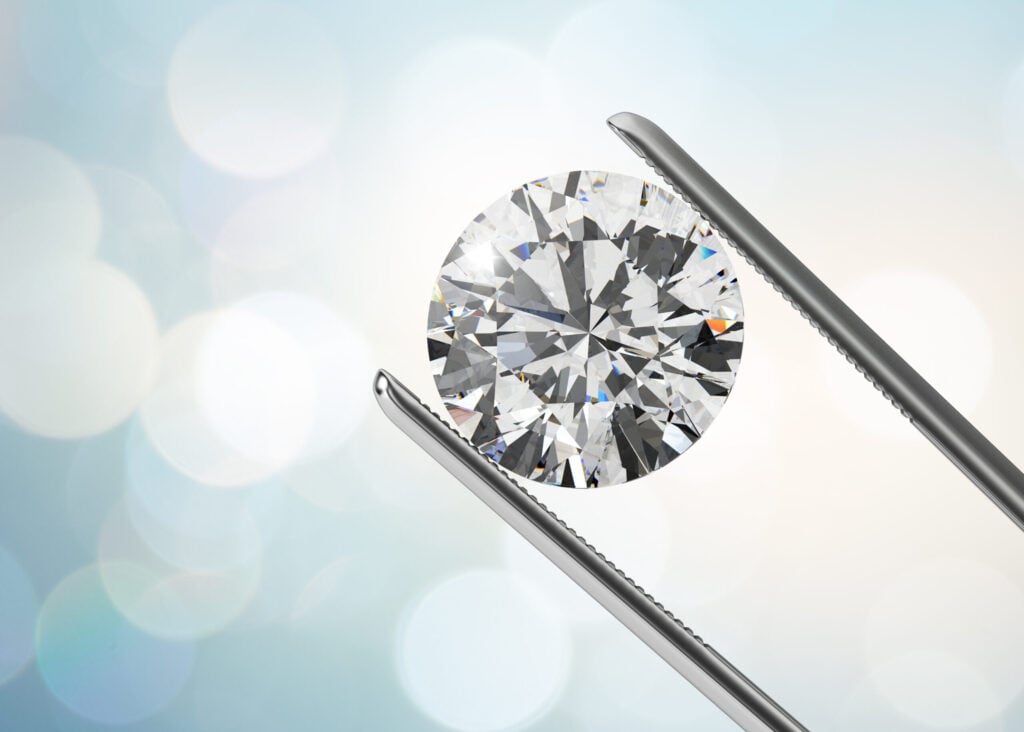
A diamond is more than a gemstone. It’s the physical proof of a promise—a tiny, brilliant universe held between two fingers. But before you can choose the one that will mean everything, you need to understand the 4Cs of diamonds: cut, color, clarity, and carat weight.
These four qualities determine how a diamond looks, how it catches the light, and how much it costs. Whether you’re shopping for an engagement ring, a milestone anniversary gift, or a piece you’ll pass down for generations, the 4Cs give you the language to shop with confidence.
At Maxon Fine Jewelry in Springfield, Missouri—The Jeweler Of The Ozarks—our team is here to walk you through every step of the process.
Why the 4Cs of Diamonds Matter Before You Buy
The diamond industry established the 4Cs as a universal grading standard so buyers everywhere could evaluate diamonds on the same terms. Without this framework, comparing two diamonds would be like comparing two paintings without any art education—you’d know one moved you more than the other, but not why.
Understanding the 4Cs helps you prioritize what matters most to you. Some buyers want maximum sparkle. Others want a larger stone. Some need a flawless certificate for peace of mind. The 4Cs let you make trade-offs with your eyes open—and your heart ready.
Here’s a quick overview before we go deeper:
- Cut—the quality of how a diamond is shaped and faceted, which controls its brilliance
- Color—how colorless (or tinted) a diamond appears on a graded scale
- Clarity—the presence or absence of internal and external flaws called inclusions and blemishes
- Carat Weight—the physical size of the diamond, measured in metric carats
Cut: The C That Creates the Sparkle
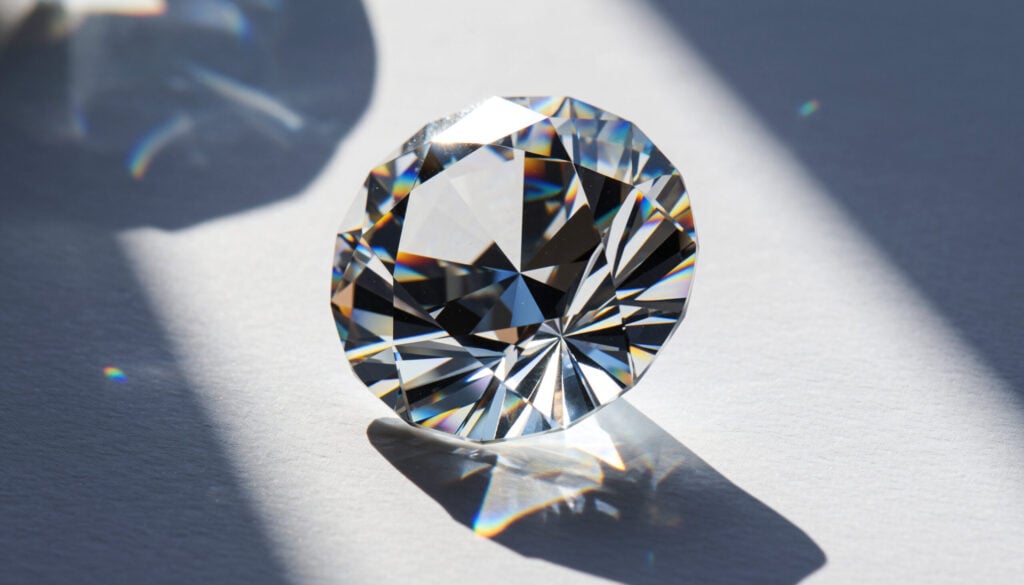
Of all the 4Cs of diamonds, cut is arguably the most important—and the most misunderstood. Cut doesn’t refer to the shape of a diamond (round, oval, pear, etc.). It refers to how well a diamond’s facets interact with light.
A perfectly cut diamond bounces light back through the top of the stone in a dazzling display of brilliance, fire, and scintillation.
The GIA grades diamond cut on a scale from Excellent to Poor. At Maxon Fine Jewelry, we recommend prioritizing cut quality above all else. A diamond with a lower color or clarity grade can still be breathtaking if the cut is exceptional. But a poorly cut diamond will look dull no matter how large or clear it is.
Cut grades to know:
- Excellent / Ideal—maximum brilliance, the best you can buy
- Very Good—reflects most light with only minor variations
- Good—reflects light well but not optimal
- Fair / Poor—light escapes through the sides or bottom, dulling the stone
If you take nothing else from this guide, remember this: an Excellent-cut diamond is a living thing. It moves. It breathes. It catches the light from across a room.
Color: How White Is White Enough?
Diamond color is graded on a scale from D (completely colorless) to Z (light yellow or brown). The closer a diamond is to D, the rarer and more valuable it tends to be.
But here’s what most buyers are surprised to learn: the difference between a D and a G is nearly impossible to see with the naked eye, and the price difference can be significant.
The color of a diamond is also heavily influenced by the metal it’s set in. A slightly warm-toned diamond (in the G–I range) set in yellow or rose gold looks absolutely stunning because the metal complements the stone’s warmth.
Set that same diamond in platinum or white gold, and a trace of color becomes more visible.
Color ranges at a glance:
- D–F: Colorless—the pinnacle of rarity, virtually no color visible even under magnification
- G–J: Near Colorless—excellent value, color difficult to detect without a comparison stone
- K–M: Faint Color—warm tones visible to a trained eye, best suited for yellow gold settings
- N–Z: Light to Very Light Color—obvious tint, not typically used in fine jewelry
We can show you diamonds side by side so you can see the difference—and decide what matters most to you personally.
Clarity: What’s Inside Your Diamond?
Diamonds are formed deep within the earth under extreme heat and pressure. It’s no surprise that most of them carry tiny internal birthmarks—called inclusions—or surface irregularities called blemishes. Clarity measures the degree to which these characteristics are present.
The GIA clarity scale runs from Flawless (no inclusions or blemishes visible even under 10x magnification) to Included (inclusions visible to the naked eye). For most buyers, the sweet spot is in the VS (Very Slightly Included) or SI (Slightly Included) range. Diamonds in these grades look eye-clean—meaning you won’t see any inclusions without a loupe—but cost significantly less than FL or IF stones.
The GIA clarity scale:
- FL (Flawless) / IF (Internally Flawless)—extremely rare, no inclusions visible under 10x
- VVS1–VVS2 (Very Very Slightly Included)—minute inclusions, nearly impossible to see
- VS1–VS2 (Very Slightly Included)—minor inclusions, not visible to the naked eye
- SI1–SI2 (Slightly Included)—inclusions noticeable under magnification, usually eye-clean
- I1–I3 (Included)—inclusions visible to the naked eye, may affect brilliance
Remember: no two diamonds have the same inclusions in the same place. In a very real sense, your diamond’s clarity characteristics are its fingerprint—proof that no one else in the world has exactly what you have.
Carat Weight: Size Isn’t Everything—But It’s Something
Carat is the unit of weight used to measure diamonds. One carat equals 0.2 grams, or 200 milligrams. It’s also the C most people fixate on first—which is understandable.
Size is visible. Size is easy to compare. But carat weight without the context of the other three Cs can be misleading.
Two diamonds of the same carat weight can look dramatically different in size depending on their cut. A shallow, poorly cut diamond may look wider but sacrifices brilliance. A well-cut diamond may look smaller face-up but will outshine its counterpart every time the light hits it.
Carat weight is also where smart shoppers find great value. A 0.90-carat diamond costs noticeably less than a 1.00-carat diamond—and the difference in size is difficult to notice on the hand. At Maxon Fine Jewelry, our experts can help you find the carat weight that looks spectacular within your budget.
How Much Should You Spend on an Engagement Ring in 2026?
It’s one of the most Googled questions in the world of fine jewelry—and for good reason. There’s a lot of pressure around this number. You’ve probably heard the old “two months’ salary” rule.
Here’s the truth: that guideline was a marketing campaign from the 1930s. It has nothing to do with love, commitment, or what’s right for your life.
In 2026, the average engagement ring purchase in the United States falls somewhere between $5,000 and $7,500—but meaningful rings exist at every price point. What matters far more than the number is how you allocate your budget across the 4Cs.
A thoughtful buyer who prioritizes cut and understands where to compromise on color and clarity can walk away with a ring that looks like it cost twice as much.
Here’s how to stretch your budget wisely:
- Prioritize cut above all else—brilliance hides a multitude of minor imperfections
- Choose a color grade of G or H for excellent value that still looks white in most settings
- Select VS2 or SI1 clarity for an eye-clean diamond that costs less than higher grades
- Consider a carat weight just below a round number (0.90 ct vs. 1.00 ct) for significant savings
At Maxon Fine Jewelry, we don’t believe in pressure. We believe in partnership. Our goal is to help you find the diamond that makes your heart stop—whatever your budget looks like. As The Jeweler Of The Ozarks, we’ve been helping families in Springfield and across southern Missouri mark life’s most important moments since 1972.
Do the 4Cs Apply to Lab-Grown Diamonds Too?
Yes. Lab-grown diamonds are graded using the exact same 4Cs framework as natural diamonds.
Shopping for Diamonds in Springfield, Missouri: Why Certified Expertise Matters
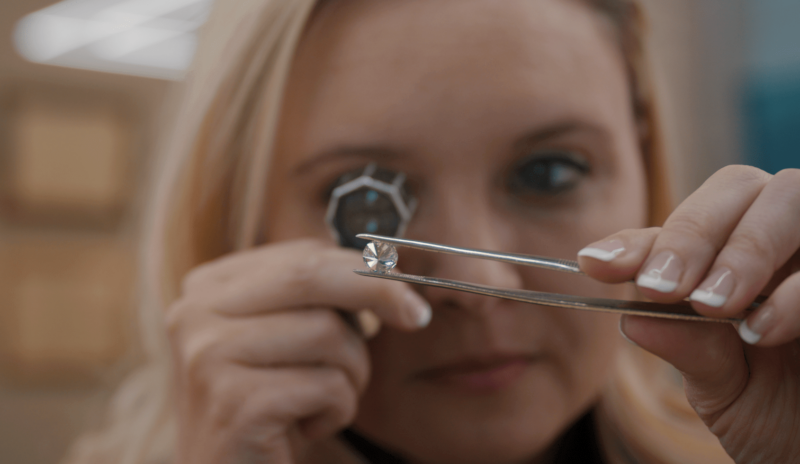
Reading about the 4Cs online is a great starting point. But nothing replaces seeing diamonds in person under proper lighting, holding them in your hand, and having a certified expert explain what you’re looking at. That’s an experience that no algorithm can replicate.
When you sit down with one of our team members, you’re not getting a sales pitch. You’re getting education, honesty, and the kind of guidance that turns a purchase into a memory.
We are The Jeweler Of The Ozarks—and we take that title seriously. Since 1972, Maxon has stood for integrity, craftsmanship, and the belief that every milestone deserves to be marked with something beautiful.
Frequently Asked Questions About the 4Cs of Diamonds
What are the 4Cs of diamonds?
The 4Cs of diamonds are cut, color, clarity, and carat weight. Developed by the Gemological Institute of America (GIA), this universal grading system helps buyers evaluate and compare diamonds with a consistent standard.
Which of the 4Cs is most important?
Cut is widely considered the most important of the 4Cs because it has the greatest impact on a diamond’s brilliance and beauty. A well-cut diamond with lower color or clarity grades will often outshine a poorly cut diamond with higher grades.
What diamond color grade should I buy?
For most buyers, diamonds in the G–H color range offer excellent value. They appear white to the naked eye and cost significantly less than D–F colorless diamonds. The ideal color grade also depends on the metal setting you choose.
What clarity grade is eye-clean?
VS1, VS2, and many SI1 diamonds are considered eye-clean, meaning no inclusions are visible without magnification. These grades represent excellent value compared to Flawless or Internally Flawless diamonds.
How much should I spend on a diamond engagement ring?
The right budget is the one that works for your financial situation. The average engagement ring in 2026 costs between $5,000 and $7,500, but beautiful rings exist at every price point. A certified gemologist can help you maximize your budget across the 4Cs.
Do the 4Cs apply to lab-grown diamonds?
Yes. Lab-grown diamonds are graded using the exact same 4Cs as natural diamonds. They are chemically and optically identical to mined stones and carry the same certifications from organizations like the GIA.
Where can I buy a certified diamond in Springfield, Missouri?
Maxon Fine Jewelry in Springfield, Missouri is home to two AGS Certified Gemologists and one GIA Graduate Gemologist. As The Jeweler Of The Ozarks, Maxon has served southern Missouri since 1972 with expert guidance and a carefully curated diamond selection.
What is a diamond certificate?
A diamond certificate (also called a grading report) is an independent evaluation of a diamond’s 4Cs issued by a gemological laboratory such as the GIA or AGS. It provides an unbiased, detailed assessment of the stone’s quality and serves as your documentation of its characteristics.
Find Your Perfect Diamond at Maxon Fine Jewelry
Now that you know the 4Cs of diamonds, you’re ready to shop smarter—and dream bigger. The right diamond is out there, and it’s waiting to become part of your story.
Visit Maxon Fine Jewelry in Springfield, Missouri, and let our certified gemologists guide you through our collection in person. We’ll help you understand every facet—literally and figuratively—so you can choose the diamond that takes your breath away.